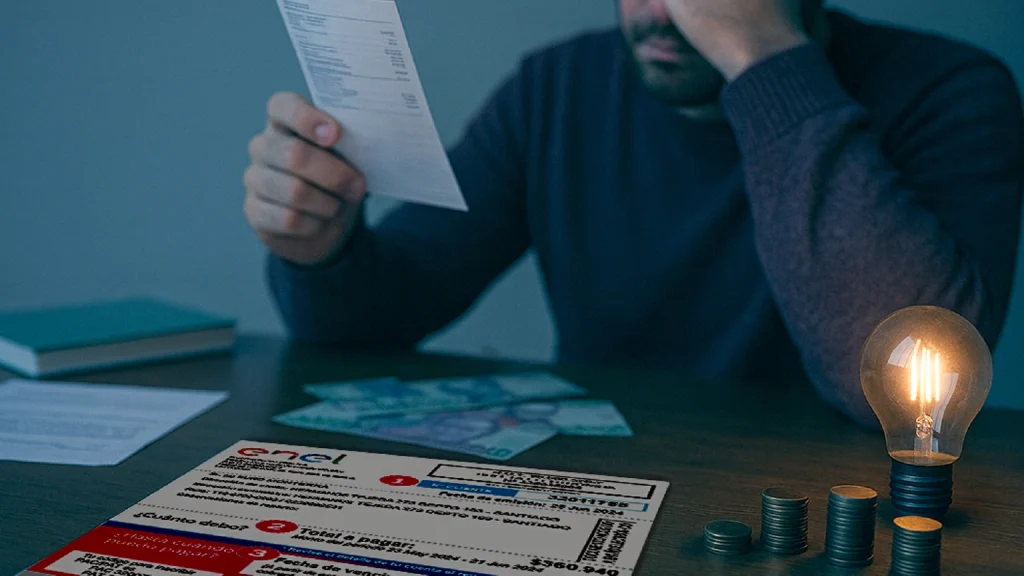
How much will electricity rise from July? Details of the new 2025 electrical adjustment
Electricity bills in Chile will suffer a new 7% increase in the second half of 2025, accumulating an increase of more than 60% in just one year. Discover the causes and solutions to protect your budget.

Co-Founder AHORRO ENERGÍA & IoT-MONITOR
The Impact of the New Increase in Electricity Tariffs
Electricity bills in Chile will suffer a new increase during the second half of 2025, with an estimated rise of 7%, according to confirmation from the Ministry of Energy. This situation adds to a series of increases that have been affecting energy prices since 2024, accumulating an increase of more than 60% in just one year.
In this context, Chilean families and businesses face a challenging scenario, where seeking sustainable energy solutions becomes increasingly urgent. The direct impact on family budgets and the operating costs of thousands of companies forces us to rethink how we consume energy and consider alternatives that allow reducing costs in the long term.
Why Is Electricity Rising in Chile?
The Dollar-Energy Exchange Rate Factor: One of the most relevant factors is the dollar-energy exchange rate in Chile. With many electrical contracts denominated in dollars, the depreciation of the Chilean peso generates a direct impact on the value of electricity tariffs. In the words of Energy Minister Diego Pardow, this new increase responds mainly to the dollar's rise, which went from 920 to 970 pesos in recent months.
End of Tariff Stabilization Period: This adjustment responds to the end of the tariff stabilization period, initiated in 2019 and which came to an end in January 2025. From now on, the system returns to a modality of semiannual updates, which means that the price of energy will be more sensitive to economic fluctuations and the international market.
Dollar-Denominated Contracts: The combination of a high dollar and electrical contracts denominated in foreign currency will continue to affect energy costs. If the exchange rate does not drop, households and businesses will continue to feel the impact on their wallets directly.
Projections and Long-Term Perspectives
According to sector experts, electricity tariffs in Chile will not stabilize completely until 2035. This is because, for several years, consumers paid artificially low bills thanks to temporary freezing mechanisms. Now, that accumulated debt must be regularized, causing a prolonged period of high prices.
According to sector projections, between 2024 and 2027 high electricity tariffs will be maintained, and only after 2028 could a more significant decrease be observed, always provided that the economic context and the dollar exchange rate in Chile allow it.
From the financial sector, it is also projected that the combination of a high dollar and foreign currency contracts will continue to affect energy costs in the medium term, making it even more relevant to consider energy alternatives that reduce dependence on the traditional electrical grid.
Impact on Households and Businesses
This new increase in electricity prices will directly impact family budgets and the operating costs of thousands of companies in Chile. Electricity bills are already a growing concern, especially in winter, when consumption increases significantly in homes, industries, and businesses.
Impact on Households: For Chilean families, the accumulated 60% increase in electricity tariffs represents a significant challenge in the monthly budget. During winter months, when heating and electricity consumption increases, the impact becomes even more pronounced.
Impact on Businesses: For businesses, especially those with high energy consumption, these increases represent a substantial increase in operating costs. Industries such as manufacturing, mining, retail, data centers, and services require large amounts of energy, so the financial impact can be considerable.
Solar Energy as a Smart Alternative
Faced with this context of continuous increases and projections of high tariffs until 2027-2028, more and more people and businesses are opting for solar energy as an alternative to face the instability of energy prices.
Solar Self-Consumption: Solar self-consumption allows you to generate your own electricity, reduce your dependence on the traditional system, and protect yourself against new increases. By installing solar panels, you can generate clean and renewable energy directly in your home or business, significantly reducing your electricity bill.
Protection Against Future Increases: Photovoltaic solar systems offer long-term protection against increases in electricity tariffs. Once the system is installed, the cost of generated solar energy remains stable, regardless of fluctuations in grid electricity tariffs.
Return on Investment: With current electricity tariffs and projections of continuous increases, the return on investment in solar systems has become more attractive. Many systems pay for themselves in 5 to 7 years, and then provide virtually free energy for more than 25 years.
Additional Benefits: In addition to economic savings, solar energy contributes to environmental sustainability, reduces carbon footprint, and can increase property value. For businesses, it also improves corporate image and compliance with sustainability objectives.
Strategies to Reduce the Impact of Increases
Energy Efficiency: Implementing energy efficiency measures can significantly reduce consumption and, therefore, the impact of tariff increases. This includes LED lighting improvements, optimization of climate control systems, and use of high-efficiency equipment.
Demand Management: For businesses, implementing energy demand management systems can help reduce costs associated with maximum demand, one of the most significant components of commercial and industrial electricity bills.
Monitoring and Control: Real-time monitoring of energy consumption allows identifying savings opportunities and optimizing energy use, reducing unnecessary costs.
How to Protect Your Energy Budget?
Given this scenario of continuous increases and projections of high tariffs until at least 2027-2028, it is essential to take proactive measures to protect family or business budgets.
Photovoltaic solar energy has become one of the most effective solutions to face this challenge. With self-consumption systems, you can generate your own energy, reduce your dependence on the electrical grid, and protect yourself against future tariff increases.
AHORRO-ENERGÍA SpA offers free evaluations that allow estimating the potential savings on your electricity bill and calculating the return on investment of a solar system. Contact us and discover how you can start saving from the first month, protecting your budget against continuous increases in electricity tariffs.