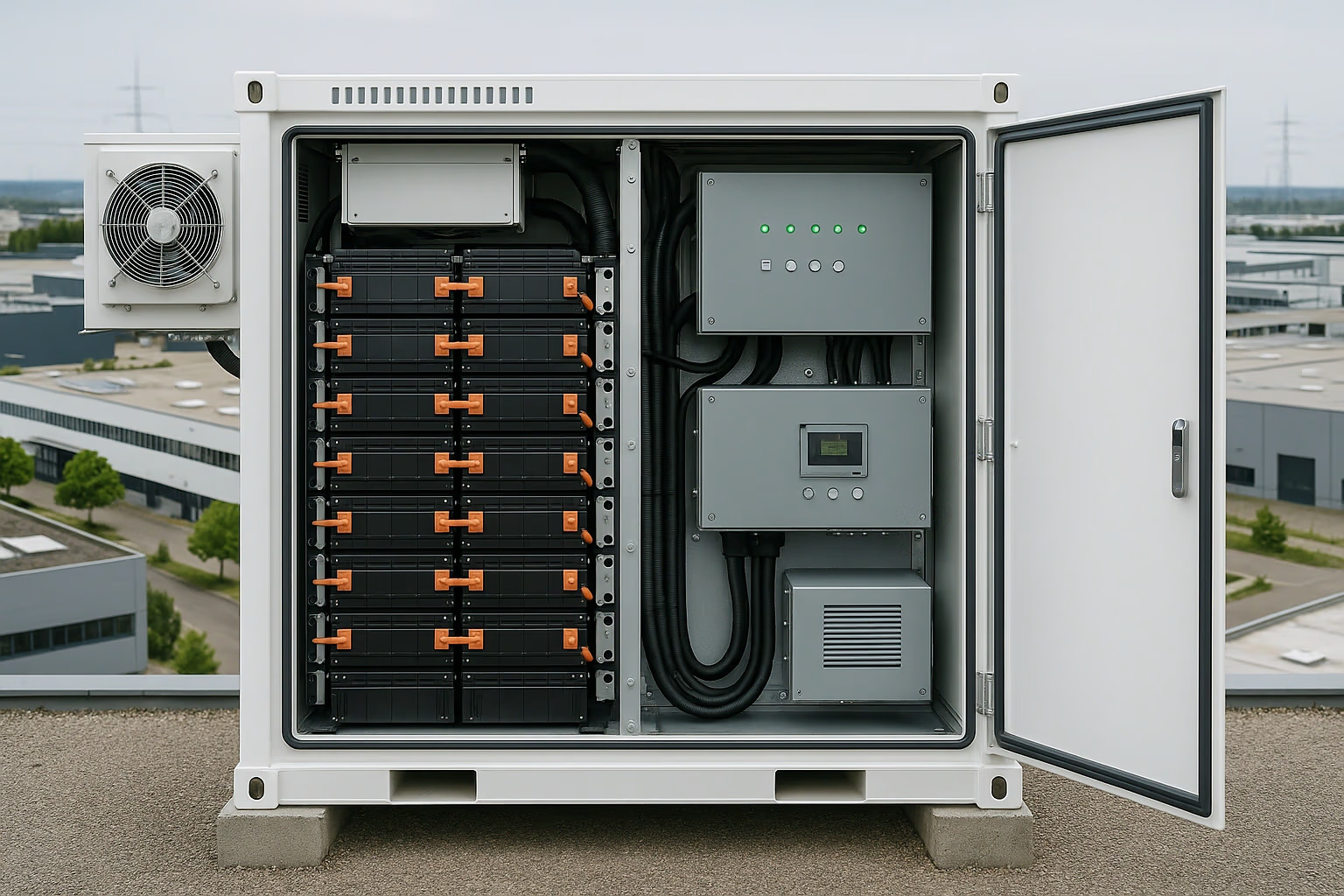
Battery Energy Storage Systems with Lithium Batteries (BESS)
Protect your home or business from power outages with BESS backup energy systems. Efficient storage, operational continuity, and energy cost optimization.

Co-Founder AHORRO ENERGÍA & IoT-MONITOR
What Is a BESS Energy Storage System?
A battery energy storage system, also known as Battery Energy Storage System (BESS), is an advanced technological solution designed to store electrical energy and release it when needed, ensuring that essential equipment and appliances continue operating without interruptions.
This system is ideal for guaranteeing a constant energy supply, even during power outages or grid failures. Unlike off-grid systems that use solar panels, energy backup systems operate through the inverter, battery, and panel, charging directly from the electrical grid. Batteries act solely as backup in case of power outages.
The duration of energy backup depends on the capacity and design of the system, ranging from a few hours to several days. Thanks to its flexibility, it adapts perfectly to the specific needs of each home or business, providing a reliable and customized solution to maintain continuous operation of critical devices and ensure user well-being.
Benefits and Competitive Advantages of BESS Systems
High Energy Efficiency: BESS systems with lithium batteries stand out for their conversion efficiency above 95%, minimizing energy losses during the energy storage and release process. This high efficiency translates into lower operating costs and greater system profitability.
Renewable Energy Integration: BESS allow storing surplus renewable energy (solar or wind) during periods of high generation and releasing it when needed, favoring greater penetration of clean energy in the energy matrix. This is especially relevant in Chile, where more than 37% of the electrical matrix comes from non-conventional renewable sources.
Demand Management and Time-of-Use Tariffs: In commercial and industrial sectors, BESS allow optimizing energy consumption and reducing exposure to high hourly rates, in addition to decreasing the maximum demand recorded with the distributor. This translates into significant savings on the monthly electricity bill, especially in installations with capacities from 100 to 1000 kWh.
Critical Backup and Operational Continuity: BESS act as Uninterruptible Power Supply (UPS) systems of large capacity, ensuring supply continuity during power outages or grid failures. With ultra-fast response times (milliseconds), they guarantee that critical equipment such as servers, medical systems, production plants, or agricultural installations continue operating without interruptions.
Grid Services: BESS systems can provide grid stabilization services such as fast reserve, frequency regulation, and deferred dispatch, contributing to the stability of the national electrical system and opening opportunities for remuneration in the energy market.
Long Lifespan and Minimal Maintenance: BESS systems with lithium batteries offer exceptional lifespan, even exceeding 15 years and more than 10,000 charge/discharge cycles, depending on use. They require minimal maintenance compared to traditional technologies, making them a profitable long-term investment.
Scalability and Flexibility: The modular architecture of BESS allows their implementation from small residential systems to large-scale industrial installations (from 100 kWh to several MWh), adapting perfectly to the specific needs of each project.
BESS System Components
Lithium Batteries: Batteries are essential components in backup systems, as they allow storing energy for later use, guaranteeing constant electrical supply even when there is no electrical grid available. Modern lithium batteries offer high energy density, fast charging, deep discharge, and extended lifespan of more than 15 years without requiring maintenance.
Inverter: The inverter is one of the key components in the system. Its main function is to transform the direct current (DC) stored in the batteries into alternating current (AC), which is what most appliances and electrical systems in homes and businesses use. Modern inverters offer automatic transition without interruptions between the grid and batteries.
Control Panel: The panel manages the distribution of energy to previously defined critical loads, ensuring that essential devices receive priority energy during a power outage.
Monitoring System: Many BESS systems include real-time monitoring that allows managing battery status, energy consumption, and receiving alerts about system operation.
How Does the System Work During a Power Outage?
Power outage detection: The backup system is equipped with a device that constantly monitors the electrical grid supply. When an interruption in supply is detected, the system identifies it immediately.
Backup system activation: Upon recognizing the outage, the backup system activates automatically. Through the inverter, the energy stored in the batteries is converted from direct current (DC) to alternating current (AC), which is the form of electricity used by most appliances and electrical systems.
Energy supply to critical loads: It's important to have previously defined which are the "critical loads", that is, the essential devices and systems that must remain operational during a power outage. The backup system supplies energy to these priority loads, ensuring their continuous operation.
Backup duration: The amount of time the system can provide energy depends on the battery capacity and the consumption of connected loads. In industrial systems with capacities from 100 to 1000 kWh, backup can extend from several hours to several days, depending on specific consumption and installed capacity.
Battery recharge: Once the electrical grid supply is restored, the batteries begin to recharge automatically, preparing for future interruption events.
Strategic Applications and Use Cases
BESS systems have a wide range of strategic applications across different sectors, from renewable energy integration to electrical grid stabilization. Their role in developing a cleaner, more resilient, and efficient energy matrix is especially relevant in Chile.
Renewable Energy Integration: Chile has reached records in solar and wind generation, with more than 37% of its electrical matrix coming from non-conventional renewable sources (NCRE). However, the intermittency of these sources generates challenges of stability and grid balance. BESS allow storing surplus energy during the day (solar) or night (wind) and releasing it when needed, favoring greater penetration of clean energy in the national energy matrix.
Demand Management and Cost Optimization: In commercial and industrial sectors with systems from 100 to 1000 kWh, BESS allow optimizing energy consumption and reducing exposure to high hourly rates, in addition to decreasing the maximum demand recorded with the distributor. This translates into significant savings on the monthly electricity bill and improves operational competitiveness.
Critical Backup and Operational Continuity: In installations where energy continuity is key —such as clinics, data centers, production plants, agricultural installations, banking, telecommunications, and mining— BESS act as Uninterruptible Power Supply (UPS) systems of large capacity, ensuring supply continuity during power outages or grid failures.
Grid Services: BESS can provide grid stabilization services such as fast reserve, frequency regulation, deferred dispatch, or black start, contributing to the stability of the national electrical system. In more mature markets, these services are remunerated, opening opportunities for additional income.
Electromobility and Fast Charging: The expansion of electromobility requires high-power charging points. BESS allow storing energy during low demand periods and delivering it instantly during fast charging, avoiding negative impacts on the distribution grid and reducing costs associated with electrical reinforcements.
Grid Congestion and Curtailment Mitigation: In Chile, one of the major challenges is transmission system congestion, especially in areas such as the north of the country where there is a high concentration of solar and wind plants. BESS play a key role by storing that energy that was previously lost (curtailment) and redirecting it to peak consumption hours, providing operational flexibility to the national electrical system.
Installation Requirements and Regulation in Chile
Energy backup systems must be installed and declared before the Superintendency of Electricity and Fuels (SEC) of Chile. The detail of the plans must be presented, indicating brand, model, lifespan, quantity, and technical specifications of the components used in the installation (inverter, batteries, panel, protections, among others) and leave a record on the SEC website.
It's important to have quality equipment certified by the SEC that ensures the system will be safe and profitable over time. Systems must comply with current electrical regulations in Chile and be installed by certified professionals.
Maintenance and Lifespan
Lithium batteries in a BESS system typically have a lifespan of 10 to 15 years, depending on the type of battery, use, and operating conditions. It's important to perform regular monitoring to verify performance and consider replacement when storage capacity degrades considerably.
Modern BESS systems require minimal maintenance thanks to lithium battery technology, which does not require periodic maintenance like traditional batteries. Real-time monitoring allows detecting any anomaly and performing preventive maintenance when necessary.
Why Choose AHORRO-ENERGÍA SpA?
With extensive experience in Chile's energy market, AHORRO-ENERGÍA SpA delivers fully customized BESS solutions. From design and installation to monitoring and continuous optimization, we guarantee long-term reliability and operational continuity.
Our energy backup systems use exclusively the highest quality lithium batteries, ensuring that your system will not require battery replacement for at least 15 years. We offer personalized advice, customized design according to your specific needs, and continuous technical support.
Do you need to protect your home or business from power outages? Contact us and discover how a BESS system can guarantee the continuity of your operations.