Off-Grid Solar Systems – Complete Guide to Energy Independence
How autonomous solar systems eliminate electricity bills and deliver full energy independence in Chile.

Co-Founder AHORRO ENERGÍA & IoT-MONITOR
What Is an Off-Grid Solar Photovoltaic System?
An off-grid solar photovoltaic system, also known as a Back-up system, operates completely independent from the public electricity grid. These systems are totally disconnected from the grid and offer backup energy for use in case of power outages, with batteries being their main component.
It uses photovoltaic solar panels, charge controllers, hybrid inverters, and lithium batteries to supply reliable 24/7 power. They can be supported by a generator, offering a considerable reduction in generator use. This system provides energy backup at all times and has total independence from the electrical grid.
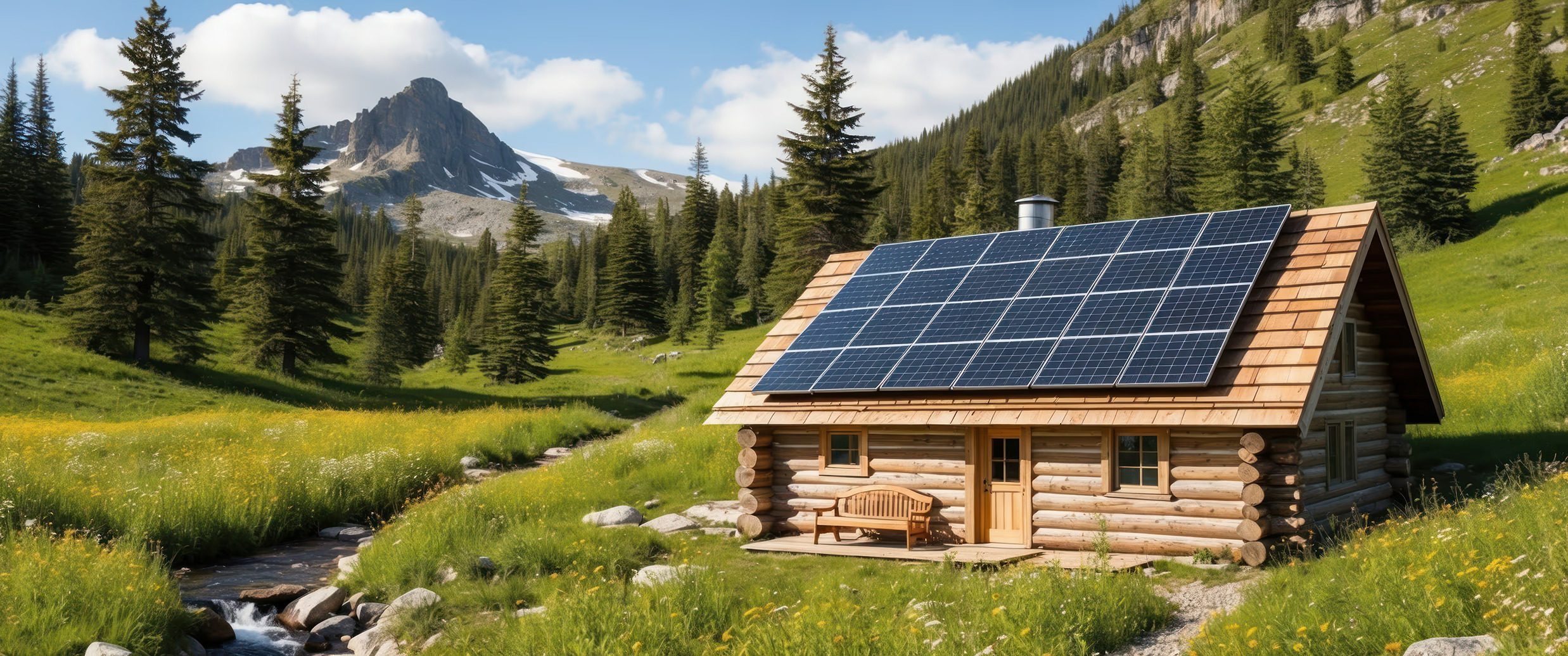
Ideal for rural zones, farms, mining operations, agriculture, cabins, shelters, and any project requiring total autonomy or without access to the electrical grid.
Learn more on our Services page.
Off-Grid System Components
A complete off-grid system is composed of several essential components that work together:
Solar panels: Responsible for attracting and capturing photovoltaic solar rays and converting them into direct current (DC). Solar panels have a lifespan of approximately 25 years.
Inverter: Responsible for converting direct current into alternating current (AC) for domestic use. The inverter must have a capacity appropriate to the solar system; if it's too small, it can overheat and fail, and if it's too large, it generates unnecessary expense.
Charge controller: Manages battery charging, protecting them from overcharging and deep discharges, optimizing their lifespan.
Batteries: Responsible for storing solar energy for use during periods when there is no sunlight. Modern lithium batteries require minimal maintenance and can last more than 15 years without needing replacement.
Energy Autonomy and 24/7 Operation
Off-grid systems provide complete energy independence. With lithium-based BESS (Battery Energy Storage Systems), you can power your home, business, or critical loads day and night—even during extended cloudy periods. Storage capacity is fully scalable: from a few hours to multiple days of autonomy.
Since it's not connected to the electrical grid, the Off-Grid system requires batteries that allow storing solar energy that is not used during the day. To know how many batteries are needed or what capacity they should have, the consumption curve must be taken into account, which includes sun hours and consumption habits.
The consumption curve will never be constant, whether at a residential or commercial level, because throughout the day (or depending on the season) energy is used in different ways. On the other hand, solar generation is also not constant, since during nighttime hours no solar light is generated.
Benefits of Off-Grid Systems
Energy Independence: You don't depend on the electrical grid, ensuring supply in case of power outages or natural disasters. The Off-Grid system continues operating without interruptions, offering energy backup at all times.
Ideal for Remote Locations: It's the best solution for rural areas, cabins, shelters, farms, and any location without access to the electrical grid or where power outages are very frequent.
Low Maintenance: Solar panels have a lifespan of more than 25 years and modern lithium batteries require minimal maintenance, with a duration of more than 15 years.
Increases property value: Properties with solar systems are more attractive in the real estate market, increasing the value of the home or business.
Replacing Diesel Generators: Many isolated locations depend on diesel generators—expensive, noisy, and highly polluting. Off-grid solar reduces diesel use by up to 95%, drastically lowering fuel costs. Every solar kWh generated avoids roughly 850 kg of CO₂ over the system's lifetime.
Operation in single-phase and three-phase lines: These systems are capable of operating in both single-phase and three-phase installations, adapting to different energy needs.
Smart Load Management and Generator Backup
Our systems include intelligent load prioritization to ensure uninterrupted power to essential equipment. When batteries run low or demand spikes occur, the backup generator starts automatically. The transition between sources is seamless and unnoticeable.
Modern inverters offer different operation modes that allow prioritizing the use of various energy sources according to the user's specific needs. The ability to program these operation modes provides flexibility and system optimization.
Installation Requirements and Regulation in Chile
Although the Off-Grid system does not depend on any electrical distribution network, it must be an installation carried out and declared before the Superintendency of Electricity and Fuels (SEC) of Chile. All details of the plans must be presented, indicating brand, model, lifespan, quantity, among other things, of the components used in the installation (panels, inverter, batteries, controllers, among others) and leave a record on the SEC website.
It's important to have quality equipment that ensures the photovoltaic system will be safe and profitable over time. Recognized photovoltaic panel brands, for example TIER 1, and components certified by the SEC.
Operation, Monitoring & Preventive Maintenance
We offer complete O&M services: preventive maintenance schedules, real-time online monitoring, fault detection, and smart energy management. This maximizes performance, extends equipment lifespan, and minimizes downtime.
It's important to understand and be aware of consumption behaviors, since when being part of a photovoltaic project, the ideal is to take full advantage of its benefits. You need to understand the amount of energy consumed and modify consumption habits to make the most of the system.
Environmental Benefits & CO₂ Reduction
Every off-grid solar system contributes significantly to sustainability: reducing noise pollution, toxic emissions, and the operational risks associated with fuel handling. It supports local and global environmental commitments, benefiting businesses, communities, and the planet.
By generating clean energy in a decentralized manner, not only is the environmental footprint reduced, but it also contributes to the stability of the national electrical system and promotes the use of renewable technologies.
Scalability and System Considerations
Yes, many Off-Grid systems are designed to be scalable. It's possible to add more solar panels, batteries, or update components such as the inverter to increase system capacity. It's important to plan the expansion from the start to ensure component compatibility.
High-consumption appliances can be used with an Off-Grid system, but the system must be properly sized to support devices such as refrigerators, air conditioners, or electric heaters. The use of high energy efficiency appliances is recommended in an Off-Grid system.
When you have more solar energy production than you consume, the excess energy is stored in the system's batteries to be used during periods of low solar radiation or when more energy is demanded than the system is producing.
Off-Grid systems are designed to function in a variety of weather conditions, but their efficiency can be affected by factors such as cloudiness, snow, rain, or extreme cold. Solar panels are less efficient in low solar radiation conditions, but they can still generate electricity, although in smaller amounts.
Why Choose AHORRO-ENERGÍA SpA?
With extensive experience in Chile's solar market, AHORRO-ENERGÍA SpA delivers fully customized off-grid solutions. From system design and installation to monitoring and continuous optimization, we ensure long-term reliability and complete energy independence.
Since off-grid systems do not depend on an existing electrical connection, they require a higher initial investment to install the entire photovoltaic system and because batteries (key element in Off-Grid) need to be changed more frequently than solar panels. However, savings on electricity and energy independence make the Off-Grid system profitable in the long term.